What an AC maintenance visit should cover before a Texas summer
A good maintenance visit is a checklist you can read, and each item on it protects something expensive.
October 21, 2026 · 3 min read
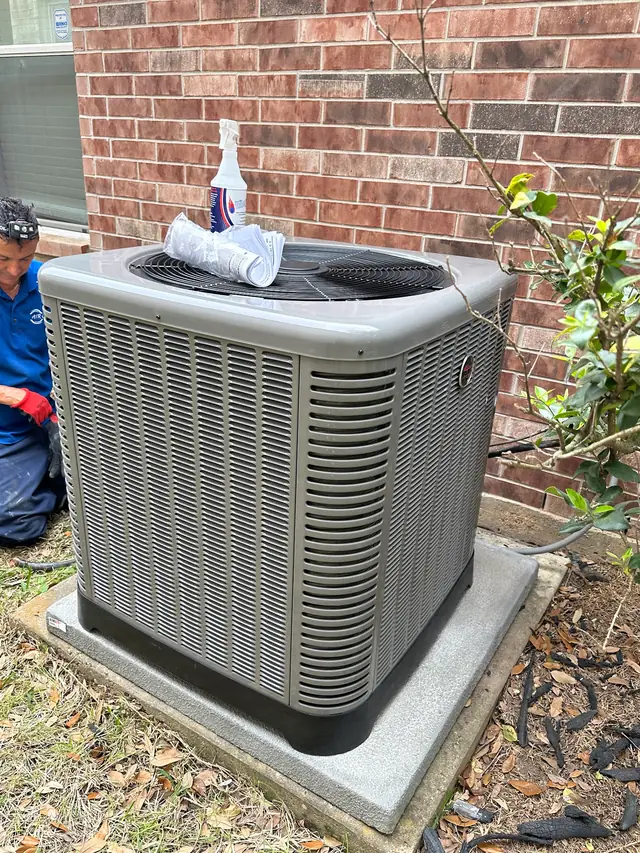
An air conditioner in this part of Texas works hard. It runs for most of the year, in heat and humidity that would punish any machine. Then it fails on the hottest weekend, when every HVAC company in the county is booked. Maintenance exists to move that failure to a day you choose.
But maintenance is a loose word. A ten-minute glance and a filter swap is not the same visit as a thorough inspection. Here is what a proper pre-summer visit should include, and why each piece matters. It is also a useful checklist to hold up against any service plan, including ours.
Coils: the part that does the cooling
Your system has two coils. The indoor evaporator coil absorbs heat from your home. The outdoor condenser coil releases it. Both only work when air passes through them freely. A layer of dust on the indoor coil or a mat of grass clippings and cottonwood fluff on the outdoor coil acts like a blanket. The system runs longer, strains harder and cools less.
A real visit means cleaning the coils, not just looking at them. Outdoor coils are the easier job. Indoor coils take more care, because they sit inside the air handler, often in an attic.
Refrigerant charge: measured, not guessed
Refrigerant is the fluid that carries heat, and it circulates in a sealed loop. It does not get used up. If the charge is low, there is a leak somewhere, and adding more without finding it is a temporary fix. A technician checking the charge should measure pressures and temperatures on the system and compare them to what the equipment calls for. A system that is overcharged or undercharged cools poorly and puts extra strain on the compressor.
Capacitor and contactor: small parts that cause big failures
The capacitor gives the compressor and fan motors the jolt they need to start and run. The contactor is the switch that sends power to the outdoor unit. Both are inexpensive parts that live in a hot cabinet and wear out. A weak capacitor can make a motor strain, overheat or fail to start. A contactor with pitted contacts can chatter or stick.
Testing them takes minutes. Replacing one before it fails is a small repair. Letting a weak one keep pushing a compressor is how a small part takes out the most expensive component in the system. That is the main argument for maintenance in one sentence.
Drain line and float switch
Every cooling season, your system sends water through a narrow condensate line. A visit should include clearing that line, checking the pan and testing the emergency float switch if the system has one. If the air handler is in your attic, a clog can mean water through the ceiling.
Filter, blower and airflow
A dirty filter is the single most common cause of poor airflow. The technician should check the filter, inspect the blower for buildup and confirm that air is moving the way it should. Weak airflow at the registers can be a filter, a blower problem or a duct problem, and it is better to know which one before July.
Thermostat and electrical connections
The thermostat tells the system what to do, so its settings, batteries and calibration matter. Loose electrical connections can cause erratic behavior and heat damage, so a thorough visit includes checking and tightening them.
A simple checklist to hold any visit against
- Indoor and outdoor coils cleaned
- Refrigerant charge checked against the equipment's specifications
- Capacitor and contactor tested
- Condensate line cleared, pan inspected and float switch tested
- Filter checked or replaced, and blower inspected
- Thermostat settings and electrical connections checked
- A plain-language report of what was found and what, if anything, needs attention
What you can do between visits
- Change your filter on the schedule recommended for your system
- Keep plants, mulch and debris away from the outdoor unit so air can flow around it
- Watch for new noises, longer run times or rooms that stay warm
- Call early when something changes, because small problems stay small if you catch them
Air Oracle's preventive maintenance programs start as low as $14 a month. They cover homeowners across Cypress, Katy, Tomball, Spring, Copperfield, Jersey Village and northwest Houston, and the maintenance plans page lists what is included. Call (888) 524-7247 to get your system on the schedule before the heat arrives.
Air Oracle, (888) 524-7247
Call (888) 524-7247More articles
Why one size does not fit all when you replace your AC
The unit that cooled your house for fifteen years may have been the wrong size the whole time, and copying it repeats the mistake.
The small float switch that protects your ceiling from your AC
A cheap safety device and a clear drain line are the difference between a tripped breaker and a water-stained ceiling.