Single stage, two stage or variable speed: what you are choosing
The word stage describes how many gears your air conditioner has, and in this climate the gears affect more than your bill.
October 21, 2026 · 4 min read
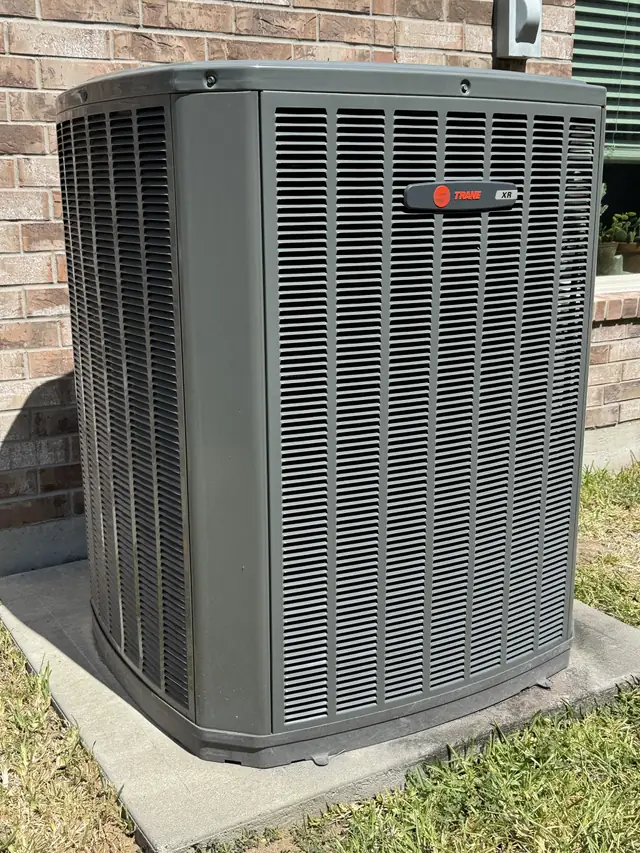
Shop for a new air conditioner and you will hit a menu of words almost immediately: single stage, two stage, variable speed. Salespeople use them as if everyone already knows the difference. Most homeowners don't, and the choice shapes how your house feels for the next fifteen years or so.
Here is the plain version.
A stage is a gear
Think of a car with one speed. It is either parked or going full tilt. That is a single-stage air conditioner. When the thermostat calls for cooling, it runs at full output until the house reaches the set temperature, then shuts off.
A two-stage system has a low gear and a high gear. On mild days it runs on low for long stretches, and on a brutal afternoon it shifts up to high. A variable speed system goes further. Instead of two fixed settings, it adjusts its output in small steps to match what the house needs at that minute. Air Oracle's own figure is that variable speed systems may provide up to between 700 and 750 stages, which is another way of saying it has no real gears at all, just a smooth range.
Why this matters more in a humid climate
In a dry state, the extra stages are mostly about comfort and noise. On the Gulf Coast, they are also about moisture. Your air conditioner removes humidity by condensing water on the indoor coil, and that happens best when the system runs for a long time at a steady, lower output. A single-stage unit that blasts at full power and shuts off cools the air fast but may not run long enough to dry it.
A system that can run longer on a lower setting keeps air moving over the coil, pulls out more moisture and avoids the on-off pattern that leaves rooms cool and clammy. Steadier running also tends to even out the temperature from room to room and from floor to floor, because you are not chasing a swing every ten minutes.
How each type tends to feel
- Single stage: the simplest design. Loud-ish starts, bigger temperature swings, and the least control over humidity.
- Two stage: a clear step up. Long, quieter low-speed runs on most days, with high speed held in reserve for peak heat.
- Variable speed: the quietest and steadiest of the three. The system matches output to the load, which gives the tightest temperature and humidity control.
When each one makes sense
There is no single right answer, and anyone who says the most advanced option is always the best is selling something. It depends on the house and on how you live in it.
- Single stage can be a sensible choice when the budget is the priority, when the home is small and well sealed, or when it is a rental or a space used only part of the year.
- Two stage fits many families who want better humidity control and quieter operation without going all the way to the top of the line.
- Variable speed is worth a hard look for larger homes, homes with rooms that never quite match the rest, anyone who notices clamminess even when the temperature is right, and households where noise or allergies matter.
More stages generally cost more up front, so the real question is whether you will notice the difference every day for years. In a house where the summer lasts well into fall and the air conditioner runs most of the year, a lot of people decide that they will.
The equipment is only half the answer
A variable speed system installed on undersized ductwork or paired with the wrong tonnage will underperform a simpler system that was sized and installed well. The stages give the system the ability to run gently. The sizing, the airflow and the controls decide whether it actually does.
That is why the order of questions matters. First, size the system to the house, as we explain in another article. Second, look at the ducts the air will travel through. Third, choose the number of stages that fits your priorities and budget. Starting with the stage count and backing into everything else gets it backward.
Questions to ask when comparing quotes
- How many stages does each option have, and what does the quote say about how it controls humidity?
- Is the thermostat or control matched to the equipment so the stages can actually be used?
- What does my ductwork need to support this system?
- How was the tonnage determined?
- What does the maintenance on this system involve?
Air Oracle is a family-owned HVAC contractor in Cypress and a Trane Comfort Specialist, and it is an authorized dealer for Trane, Goodman and Ruud. Complete system changeouts start with a free estimate, and financing is available. Their system installation page explains the process, or you can call (888) 524-7247 and talk it through.
Air Oracle, (888) 524-7247
Call (888) 524-7247More articles
Why one size does not fit all when you replace your AC
The unit that cooled your house for fifteen years may have been the wrong size the whole time, and copying it repeats the mistake.
The small float switch that protects your ceiling from your AC
A cheap safety device and a clear drain line are the difference between a tripped breaker and a water-stained ceiling.